
Tired-looking eyes are not always caused by the same problem.
Under-eye hollowness, shadows and darkness can result from different anatomical changes, which is why modern tear trough treatment is no longer simply about adding filler beneath the eyes. Tear trough treatment is one of several dermal filler treatments used to address age-related changes in facial volume and contour.
Key Insights About Tear Trough Filler
Tear trough treatment is no longer simply about filling the under-eye hollow. Modern treatment planning considers whether the concern comes from true volume loss, surrounding facial support, skin quality, or a combination of these factors.
- Direct filler is not always necessary: some under-eye concerns can be improved without adding volume directly to the tear trough.
- Less can be better: when direct tear trough filler is appropriate, the goal is to use the minimum amount needed.
- Anatomy determines the approach: available space, facial support, malar bags, puffiness and age-related changes influence product choice and placement.
- Different fillers have different roles: treatment may involve traditional HA filler, SkinVive, or structural support outside the tear trough.
The Table of Content:
- What Is Tear Trough Filler and What Can It Improve?
- Who Is a Good Candidate for Tear Trough Filler?
- When Direct Tear Trough Filler May Not Be Appropriate
- Tear Trough Filler for Mature Faces
- Tear Trough Filler vs SkinVive
- Tear Trough Filler Technique, Safety & Recovery
- Tear Trough Filler Before & After Results
What Is Tear Trough Filler and What Can It Improve?
Tear trough filler is used to soften under-eye hollowness and shadows that can create a tired appearance.
Traditionally, low-viscosity hyaluronic acid fillers were used to replace volume directly in the tear trough, helping smooth the transition between the lower eyelid and upper cheek.
Today, under-eye treatment with dermal fillers has evolved beyond simply filling the hollow.
Newer injectable approaches can also improve under-eye shadows and tired-looking eyes without adding volume directly to the tear trough. This allows treatment to be selected according to whether the concern is primarily volume loss, visible shadowing, or a combination of both.
Who Is a Good Candidate for Tear Trough Filler?
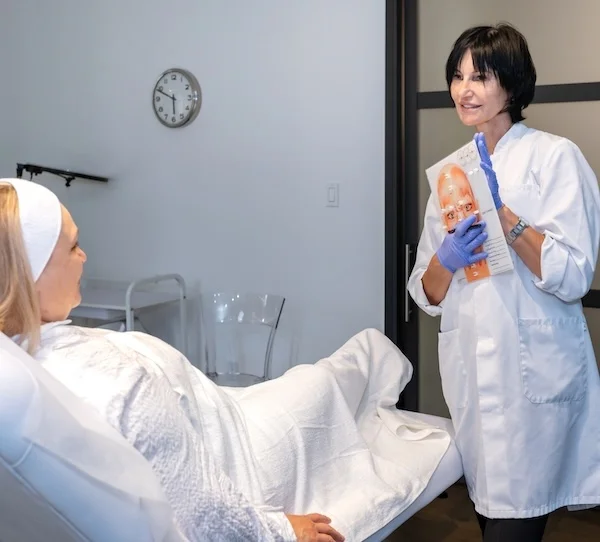
A good candidate for tear trough filler is determined by under-eye anatomy, not simply by the presence of hollowness or dark shadows.
During consultation, we assess several factors before deciding whether filler should be placed directly in the tear trough:
- Anatomical space: Is there sufficient space for appropriate filler placement without making the product more visible?
- Lateral and midface support: Is the under-eye hollow partly related to volume loss in the surrounding facial structures?
- Need for direct tear trough filler: Could restoring lateral support first reduce the amount of filler required directly beneath the eye?
- Malar bags and puffiness: Are there existing malar bags, swelling or other anatomical features that could affect the treatment plan?
- Facial asymmetry: Are differences between the two sides related to volume loss, anatomy or ligament position?
Our goal is to use the minimum amount of filler necessary in the tear trough rather than filling the under-eye hollow in isolation.
When Direct Tear Trough Filler May Not Be Appropriate
Not every under-eye hollow or shadow should be treated by adding volume directly to the tear trough. The anatomy and cause of the concern determine which type of filler and injection approach may be more appropriate.
- Limited anatomical space: When there is insufficient space for deep filler placement, adding volume directly to the tear trough may increase the risk of visible filler or irregularity.
- Existing puffiness: Additional volume beneath the eye may make an already puffy area appear heavier.
- Malar bags: Treatment may need to address the surrounding facial support and visible borders rather than filling the tear trough itself.
- Loss of lateral or midface support: Restoring support first may reduce the hollow and significantly decrease the amount of filler needed directly under the eye.
- Darkness with minimal volume loss: When shadowing is influenced more by skin quality or light reflection than by a true volume deficit, a non-volumizing injectable approach may be more appropriate.
The question is therefore not simply whether to use filler, but which filler, where to place it, and whether additional volume in the tear trough is necessary at all.
Tear Trough Filler for Mature Faces
In mature faces, correcting the under-eye hollow directly does not necessarily make the face look younger.
The tear trough is often only one part of broader age-related changes in facial volume and support, so treatment needs to consider the surrounding anatomy rather than filling the hollow in isolation.
There are two important reasons for a more conservative approach:
- Direct under-eye filler can become more visible over time. As the tissues around the eyes continue to change with age, previously placed filler may contribute to delayed puffiness, bulging or visible irregularities.
- Restoring surrounding facial support can improve the tear trough itself. Lateral and midface filler placement may lift and support the tissues around the under-eye area, reducing the hollow and decreasing the amount of filler needed directly in the tear trough.
For mature patients, our principle is to restore facial support first and use as little product as possible directly beneath the eyes.
Tear Trough Filler vs SkinVive
Traditional tear trough filler and SkinVive can both improve tired-looking under-eyes, but they work differently.
Tear trough filler replaces a true volume deficit, while SkinVive improves skin quality and light reflection, helping soften visible shadows without adding structural volume.
For younger patients with minimal volume loss, we often consider SkinVive when the main concern is under-eye darkness, shadowing or a tired appearance. SkinVive can then be used under the eyes to improve skin quality and soften remaining shadows, including visible margins around malar bags.
For mature faces, treatment usually begins by assessing and restoring lateral facial support with dermal filler or HarmonyCa when appropriate.
The choice is not necessarily tear trough filler or SkinVive—each has a different role, and they may be used together as part of the same treatment plan.
Learn more about SkinVive in Toronto and how it is used to improve skin quality without traditional volume replacement.
Tear Trough Filler Technique, Safety & Recovery
The under-eye area requires conservative product selection, precise placement and careful assessment of the surrounding anatomy.
Cannula vs Needle
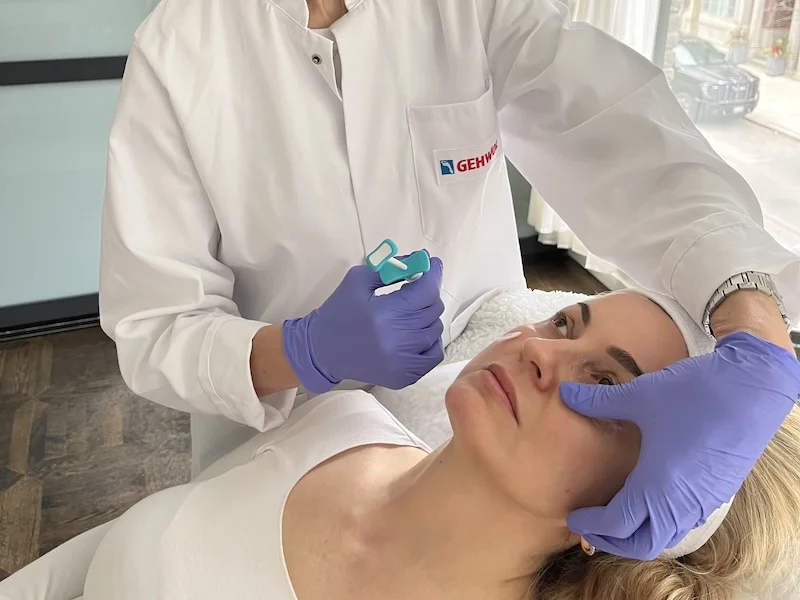
For most tear trough treatments, we prefer a cannula rather than multiple needle injections. A cannula can reduce the risk of vascular injury compared with a needle.
Swelling, Bruising and Early Recovery
Swelling and bruising are common during the first days after under-eye injections. Malar bags may temporarily look more prominent because of normal tissue swelling or a bruise beneath the area. The two sides can also recover differently, so the final result should be assessed after the swelling and bruising have settled.
Delayed Puffiness, Bulging and Tyndall Effect
Under-eye filler complications can sometimes appear months or even years after treatment. Why does this happen? Changes in the orbicularis oculi muscle and surrounding tissues with age may affect the position of previously placed filler, allowing it to become more superficial. How can it look? The filler may appear as persistent puffiness, a visible bulge, or a blue-grey colour known as the Tyndall effect. When appropriate, hyaluronidase can be used to dissolve unwanted hyaluronic acid filler
Tear Trough Filler Before & After Results
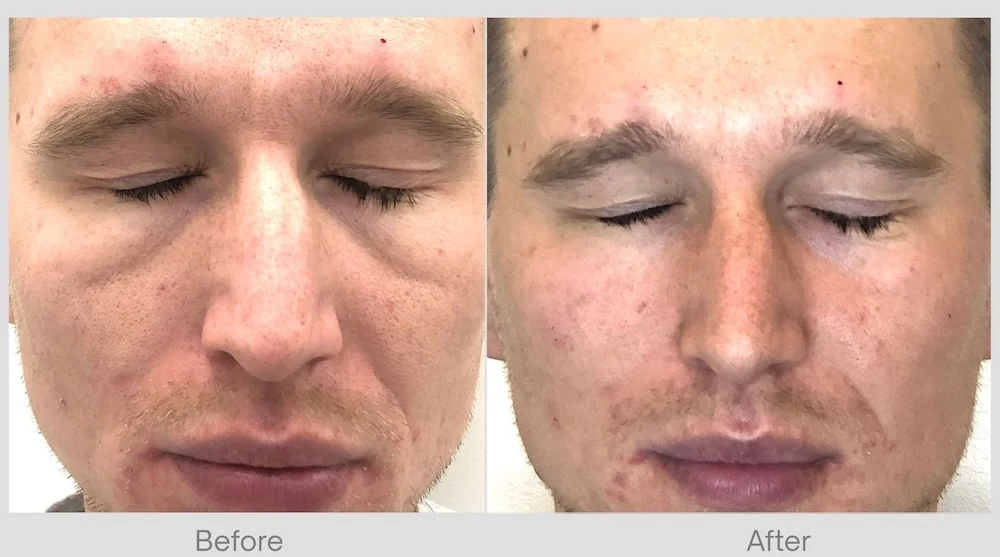
Tear trough filler results are visible immediately, but the treatment-day appearance represents only part of the final result.
The area typically continues to improve as swelling settles and the filler integrates with the tissues, with the result better assessed after 2–4 weeks.
See our dermal filler before & after results to view treatment outcomes from MedVSPA Toronto.
Tear Trough Filler FAQs
1. How much tear trough filler do I need?
Most patients require only a small amount of product directly in the tear trough. The amount depends on the under-eye volume deficit, surrounding facial support and whether other areas are treated first.
2. How long does tear trough filler last?
Hyaluronic acid filler under the eyes can last a long time. Longevity varies by product, anatomy and previous treatments.
3. Can tear trough filler help dark circles?
It can improve dark circles when shadowing from under-eye hollowness contributes to the darker appearance. Pigmentation itself is not removed by filler, so the cause of the darkness needs to be assessed before treatment.
4. Can I have tear trough filler if I already have under-eye filler?
Yes, but previous filler should be assessed before adding more product. Persistent filler, puffiness, bulging or changes in its position may mean that dissolving or using a different treatment approach is more appropriate.
5. Is tear trough filler suitable for men?
Yes. Tear trough filler can be used for men with under-eye volume loss and a tired appearance, but product amount and placement should respect the individual facial anatomy rather than creating unnecessary fullness.
Book Your Under-Eye Consultation in Yorkville
Under-eye treatment at MedVSPA starts with an anatomical assessment, not with choosing a filler. We discuss options such as deeper traditional filler, more superficial SkinVive, or restoring surrounding facial support first. The recommendation is based on your anatomy and age-related changes, with the benefits, limitations and risks of each option explained during consultation.