
Chin filler is a non-surgical injectable treatment used to improve chin projection, shape and lower-face proportions. At MedVSPA in Yorkville, Toronto, it is part of our personalized dermal filler treatments.
Key Insights About Chin Filler
- Proportion over size: The goal is facial balance, not simply a bigger chin.
- Assessment matters: Chin projection should be assessed in relation to the lips, nose and lower face.
- More filler is not necessarily better: Conservative correction helps avoid an oversized or overly broad chin.
- Not every lower-face concern is a chin problem: Jawline structure, muscle activity or tissue descent may require a different approach.
- Individual planning: Shape, projection and amount vary with anatomy.
The Table of Content:
What Can Chin Filler Improve?
Chin filler can improve several structural concerns related to chin shape, projection and lower-face proportions.
- Recessed chin: Adds forward projection when the chin sits too far back in profile.
- Short chin: Can visually lengthen the chin and improve lower-face proportions.
- Chin shape: Can refine a chin that appears narrow, rounded or lacks definition.
- Minor asymmetry: Targeted placement can improve differences in chin shape or projection.
- Profile balance: Improving chin projection can create a more balanced relationship between the nose, lips and chin.
How We Assess Chin Projection and Facial Proportions
Chin assessment considers more than how far the chin projects. We evaluate the profile, lower-face proportions, chin width and shape to determine whether filler is appropriate and where structural correction is actually needed.
Profile and Chin Projection
From the profile, we assess how the chin relates to the nose and lips rather than evaluating it in isolation. A chin that sits too far back can affect overall profile balance, while excessive projection can make the lower face appear disproportionately prominent.
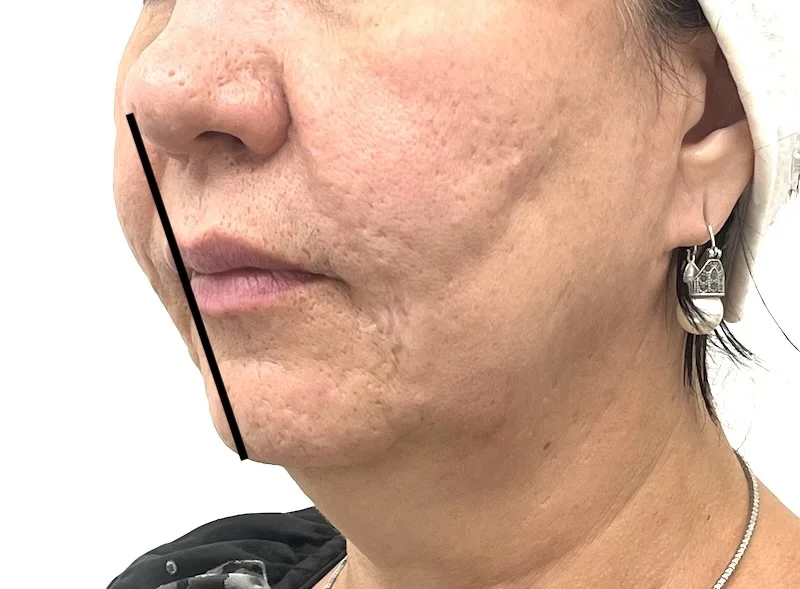
Lower-Face Proportions
Chin length and projection influence the proportions of the lower face. A short or recessed chin may make the lower third appear less balanced, but the correction should be based on the individual face rather than a standard measurement or predetermined amount of filler.
Chin Width and Shape
The chin must also be assessed from the front because projection alone does not create facial balance. Width, shape and existing asymmetry influence treatment planning. In particular, excessive width or volume can make a naturally feminine chin appear heavier or more masculine.
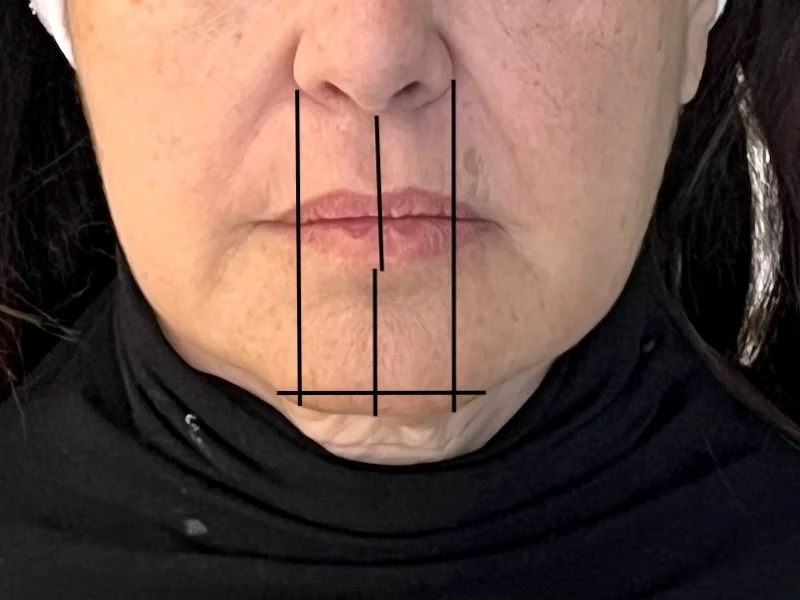
When Chin Filler May Not Be the Right Treatment
Chin filler may not be the right treatment when the concern is caused by something other than insufficient chin projection or shape. Adding volume to the chin without identifying the underlying cause can create imbalance rather than improve facial proportions.
- Jawline volume loss: If the main concern is loss of structure along the mandibular border or jaw angle, jawline filler may be more appropriate.
- Muscle activity: A hyperactive mentalis, DAO or platysma can influence chin and lower-face appearance. In these cases, Chin Botox may be considered instead of—or alongside—filler.
- Tissue descent or laxity: When jowling or reduced lower-face definition is primarily related to tissue descent rather than chin projection, adding chin volume alone may provide limited improvement.
- Adequate chin projection: If the chin already has appropriate projection and proportions, additional filler can make it appear overly prominent, wide or heavy.
The treatment decision should therefore be based on what is actually causing the imbalance, rather than automatically adding filler to the chin.
Chin Filler for Mature Faces
Chin filler in mature faces requires careful assessment because aging can change both chin proportions and the surrounding lower-face structure. Loss of bone and soft-tissue support, changes around the mouth and development of jowls can alter how the chin relates to the rest of the face.
In some mature patients, restoring chin projection or length can improve lower-face proportions and create better continuity between the chin and jawline. However, treating the chin alone may not be enough when significant jawline volume loss, tissue descent or muscle activity is also present.
The goal is not to enlarge or overly project the chin, but to restore proportion while avoiding a heavy, broad or overfilled lower face.
Chin Filler Treatment Planning and Technique
Chin filler treatment is individualized through product selection, injection depth, placement and technique according to the correction required.
Correcting Chin Projection and Length
Chin projection can often be refined through precise placement rather than simply increasing filler volume. Filler may be placed to increase forward projection, add vertical length or refine specific areas of the chin depending on the treatment goal.
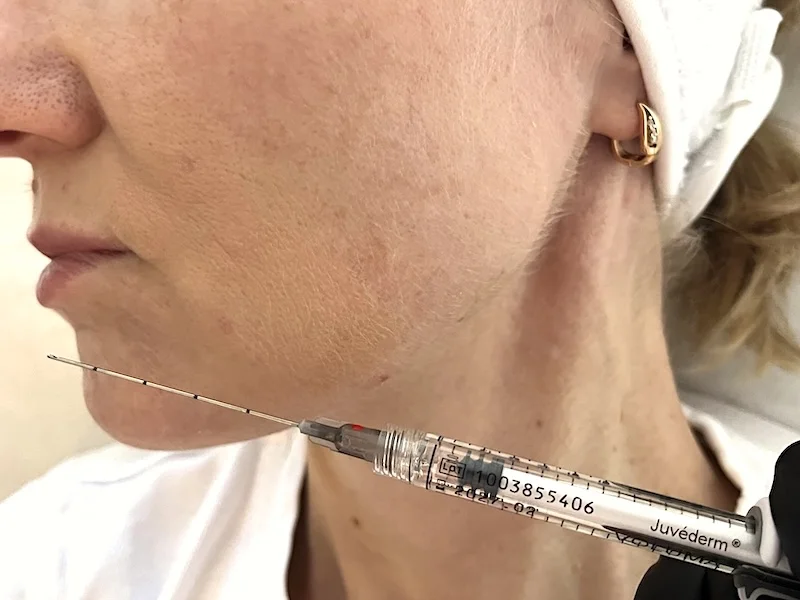
Juvéderm Volux for Structural Support
Juvéderm Volux is a structural hyaluronic acid filler we use for chin projection and shape correction. Its firmness makes it suitable for areas where defined structural support is required.
Cannula, Needle and Injection Safety
Chin filler may be placed with a needle, cannula or a combination of both, depending on the location, depth and correction required. Facial anatomy and vascular structures are considered during treatment, and no injection technique completely eliminates the risk of complications.
Chin Filler Before & After Results
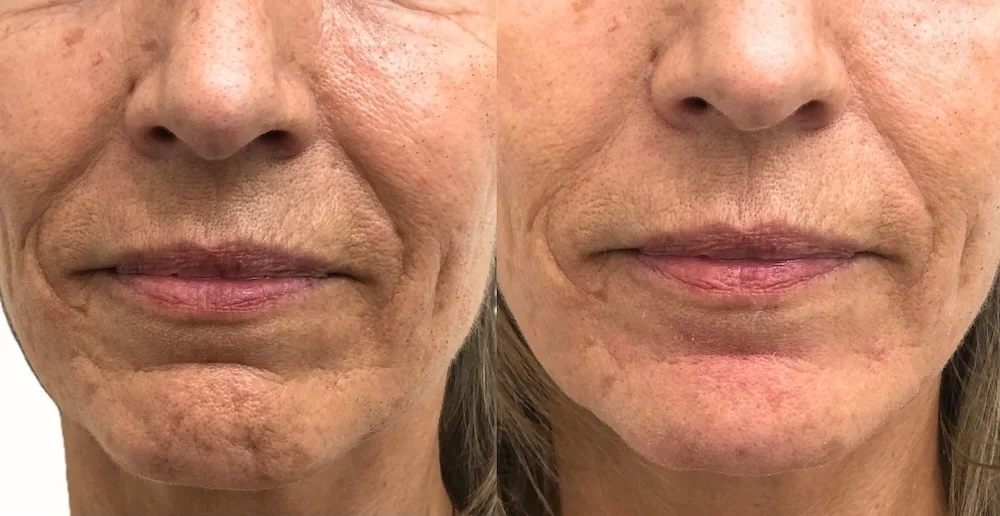
Chin filler results are visible immediately, although swelling can temporarily affect the appearance during the first days after treatment. As swelling settles, the final contour becomes easier to evaluate.
Before-and-after photos are most useful when comparing the profile and front view, because improvement may appear differently from each angle. Our Before & After Results show examples of individualized injectable treatments at MedVSPA.
Chin Filler FAQs
1. How long does chin filler last?
Juvéderm Volux used for chin filler can provide results lasting up to 24 months. Longevity varies between patients depending on individual factors and the amount of correction performed.
2. How many syringes of chin filler will I need?
The amount depends on existing chin projection and the degree of correction required. Some patients may achieve their goal with one syringe, while greater structural correction may require additional filler.
3. Will chin filler make my chin look too big?
Chin filler should not make the chin look disproportionately large when treatment is planned conservatively. The amount and placement are selected to improve facial proportions while preserving the natural shape of the chin.
4. Is there downtime after chin filler?
Downtime is usually minimal. Temporary swelling, tenderness or bruising can occur after treatment and generally improves over the following days.
5. Can chin filler be combined with Botox?
Yes. Chin filler and Botox address different concerns and may be combined when both structural correction and muscle activity contribute to the appearance of the chin or lower face.
Book Your Chin Filler Consultation in Yorkville
A chin filler consultation determines whether the concern is best addressed with chin filler alone or as part of a broader lower-face treatment plan. The recommendation is based on what is actually contributing to the imbalance rather than automatically adding volume to the chin.