
Dermal fillers in Toronto can do more than replace lost facial volume.
At MedVSPA Yorkville, we use traditional hyaluronic acid fillers alongside newer injectables such as SkinVive and HarmonyCa to address different layers of facial aging. Treatment is planned around your facial structure, skin quality, proportions, and goals—with an emphasis on natural-looking results rather than simply adding more volume.
Key Insights About Dermal Fillers
- Fillers are no longer only about adding volume. Different injectables can address volume loss, structural support, or skin quality.
- Mature faces require different planning. Restoring support may be more important than filling every hollow or fold.
- Where you see aging is not always where filler should be placed. Treatment depends on facial anatomy and structural changes.
- Filler is not always the best first treatment. Botox or RF microneedling may be more appropriate for muscle activity or skin remodeling.
- Treatment is planned before injections begin. Product, amount, expected results, recovery, and cost are discussed in advance.
The Table of Content
- What Are Dermal Fillers?
- What Can Dermal Fillers Improve
- Dermal Fillers for Mature Faces
- Dermal Filler Treatment Areas
- Beyond Volume: SkinVive and Collagen-Stimulating Injectable
- When Dermal Fillers Alone Aren't Enoug
- When We May Not Recommend Dermal Filler
- Dermal Filler Before & After Results
- Cost, Safety & Recovery
What Are Dermal Fillers?
Dermal fillers have evolved beyond simply adding volume. Traditional hyaluronic acid fillers replace age-related volume loss by filling areas where facial fat has diminished, helping restore contours and facial proportions.
New-generation injectables take a different approach. HarmonyCa combines hyaluronic acid with a collagen-stimulating component, while SkinVive works within the skin without creating traditional facial volume. Modern injectable treatments can therefore be selected according to how each product works, rather than treating all fillers as interchangeable.
What Can Dermal Fillers Improve?
Injectable treatments can address two main types of concerns: changes in facial structure and changes in skin quality. Treatment depends on what needs correction, rather than simply where a line, hollow, or shadow appears.
Volume Loss and Structural Changes
Structural and hyaluronic acid fillers can help:
- restore volume in hollow or depleted areas
- improve facial contours and proportions
- define the chin and jawline
- provide support to areas affected by tissue descent
- soften folds and shadows
- correct visible asymmetry
Skin Quality and Collagen Support
Skin-quality and biostimulatory injectables can help:
- improve skin hydration and smoothness
- soften fine lines and superficial shadows
- improve skin density and firmness
- support collagen remodelling
- improve overall skin quality without adding unnecessary volume
The type of concern determines the injectable we choose: traditional filler for precise volume replacement and contouring, or newer injectable technologies when skin quality or collagen support is the priority.
Dermal Fillers for Mature Face
Mature faces often need support rather than simply more volume. Aging affects facial fat, ligaments, bone structure, skin, and muscles at the same time. Filling every hollow or fold directly can make the face look heavier instead of younger.
Why Adding More Volume Isn't Always Better
Many mature patients are afraid of looking puffy or obviously “filled.” They don't want oversized cheeks or lips, smaller-looking eyes, or facial features that no longer look like their own.
We first look at where facial support has been lost and then decide where filler is actually needed. The goal is to restore balance without unnecessarily increasing facial volume.
Lateral Face Lifting and Structural Support
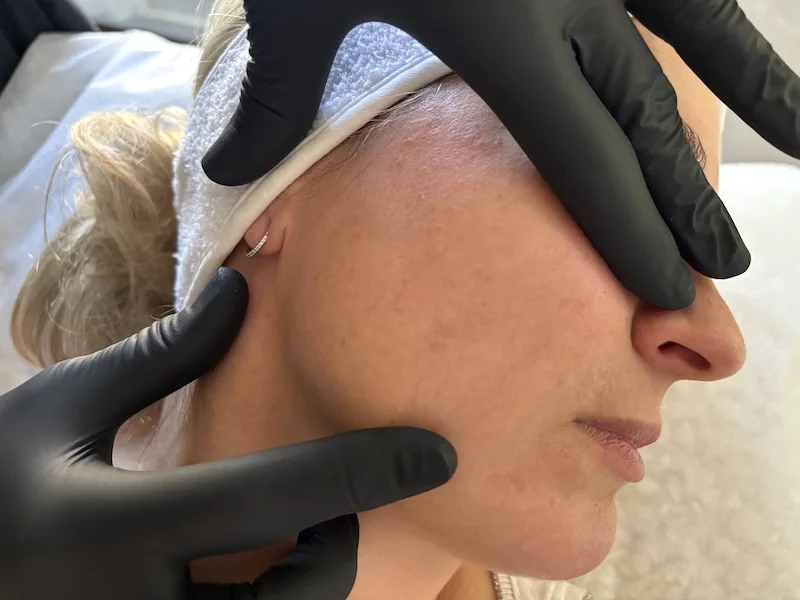
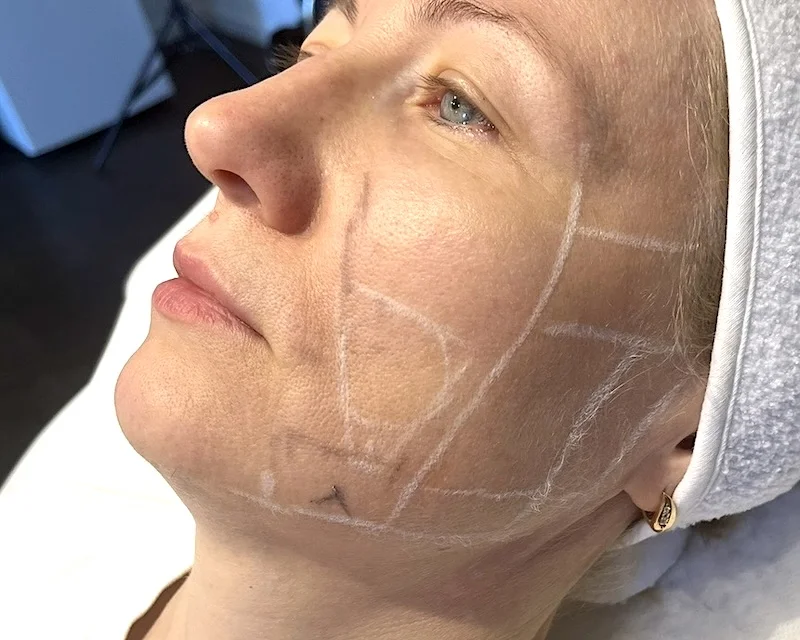
For mature faces, we often start laterally rather than in the centre of the face. Small amounts of filler can be placed high near the hairline and ears and around the angle of the jaw. Supporting these areas can improve facial contours without making the central face look fuller.
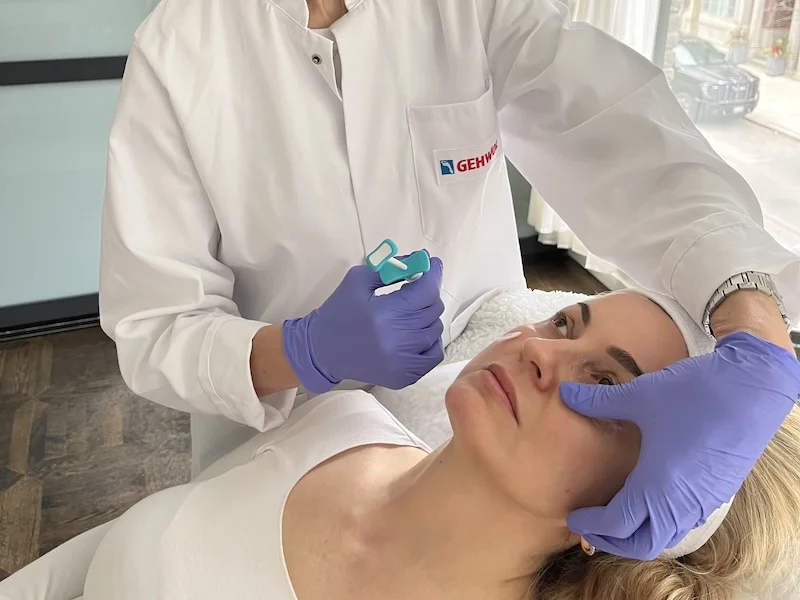
We frequently use a cannula to distribute filler more softly and reduce tissue trauma. This can be particularly useful in mature faces, where blood vessels and tissues may be more fragile.
Treating Facial Asymmetry With Age
Aging does not happen equally on both sides of the face. One side may lose more volume or develop greater tissue descent than the other.
For this reason, each side may need different injection points and different amounts of filler. The goal is not perfect symmetry, but better facial balance while keeping the result natural.
Dermal Filler Treatment Areas
The area where aging is visible is not always the area that should be filled. Treatment planning considers facial proportions and structural changes before deciding where filler can provide the most balanced result.
Tear Trough and Under-Eye Area
Under-eye filler may improve hollowing caused by volume loss, but not every under-eye concern should be filled directly. We are particularly selective when treating this area because tissue changes can affect how filler looks over time. Learn more about Tear Trough Filler.
Jawline and Jowls
Jawline filler can restore definition and improve lower-face contours. Rather than filling directly beside a jowl, treatment may include structural areas such as the mandibular angle to create better support and balance. Learn more about Jawline Filler.
Chin and Lower Face
Chin filler can improve projection, facial proportions, and lower-face balance. Placement and volume are selected according to the existing profile rather than creating a standardized chin shape. Learn more about Chin Filler.
Lips and Perioral Area
Adding more lip volume isn't always the best approach, especially when the concern is skin quality or fine lines around the mouth. In selected patients, SkinVive may be considered to improve hydration and skin quality without creating traditional lip volume.
Beyond Volume: SkinVive and Collagen-Stimulating Injectables
Newer injectables can improve more than facial volume. SkinVive focuses on skin quality, while HarmonyCa combines structural support with collagen stimulation, giving us different options depending on what the face needs.
SkinVive for Skin Quality
SkinVive improves hydration, smoothness, and skin quality without adding traditional facial volume. We use it when the goal is a plumper, brighter-looking skin surface rather than changing facial contours. Learn more about SkinVive.
HarmonyCa for Structure and Collagen Support
HarmonyCa combines hyaluronic acid (HA) and calcium hydroxyapatite (CaHA) in one syringe. It may be considered for mild to moderate facial laxity and contour loss when both immediate structural support and gradual collagen stimulation are desired. Learn more about HarmonyCa.
When Dermal Fillers Alone Aren't Enough
Fillers can restore volume, structural support, and skin quality, but they cannot address every component of facial aging. Changes in muscle activity and deeper skin remodeling may require treatments that work differently from injectables.
We may add Botox when excessive muscle activity contributes to wrinkles, facial imbalance, or lower-face heaviness. RF Microneedling may be recommended when improving skin density, firmness, and collagen remodeling is a priority.
For some patients with more advanced aging, we may improve skin quality first and restore facial structure with fillers afterward. The treatment sequence depends on which changes are contributing most to the appearance of the face.
When We May Not Recommend Dermal Filler
Sometimes the best filler decision is not to inject. If adding volume is unlikely to improve the underlying concern—or may make the face look heavier or less natural—we may recommend a different treatment or a different sequence.
We may postpone or avoid filler when:
- Skin quality is the main concern. Significant thinning, laxity, or textural changes may benefit from skin treatment before additional volume is considered.
- The under-eye area is prone to puffiness. We are particularly selective with tear trough filler when tissue changes increase the risk of persistent swelling or visible irregularities.
- Previous filler has created excess volume or migration. Adding more product may worsen the problem rather than correct it.
- The concern is primarily muscular. Botox may be more appropriate when excessive muscle activity is driving the visible change.
- More filler would distort facial proportions. Larger cheeks, lips, or chin are not automatically a better rejuvenation strategy.
The goal is not to find somewhere to place filler, but to determine whether filler will actually improve the face.
Dermal Filler Before & After Results
Before and after photos can help you understand the degree of change possible with a personalized filler treatment plan. Results vary between patients, and our goal is improvement that remains consistent with the person's natural facial features.
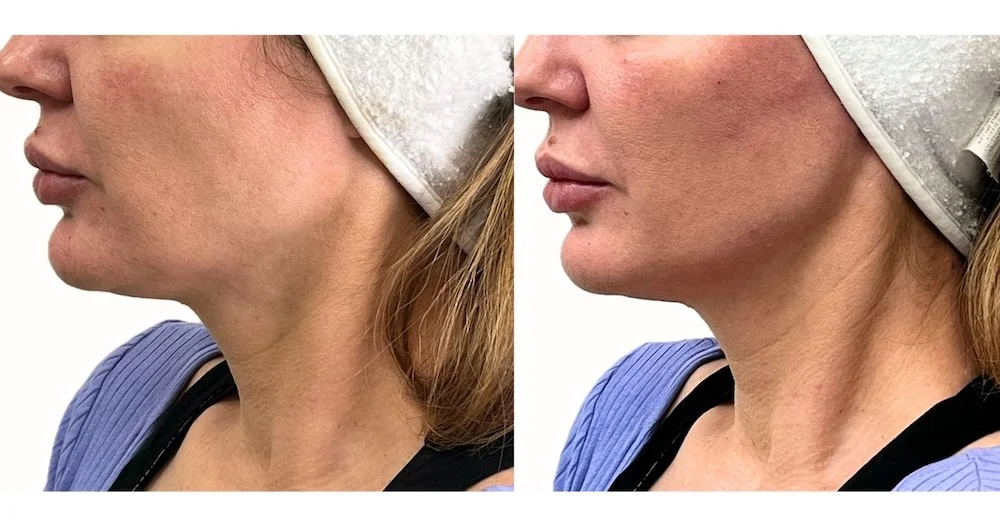 View our Dermal Filler Before & After photos to see results from MedVSPA clients.
Cost, Safety & Recovery
Knowing the expected cost, possible risks, and recovery time helps you plan dermal filler treatment before deciding to proceed.
Dermal Filler Cost in Toronto
Dermal filler cost depends on what we are trying to correct and the amount of product required. Volume-restoring fillers may require several syringes, while SkinVive and HarmonyCa follow different treatment protocols and dosing.
After consultation, the products, number of syringes, and total cost are provided in writing before treatment. Each syringe is opened individually, allowing you to verify the product name, expiration date, and that the full syringe is used.
Safety and Possible Side Effects
Temporary swelling, bruising, tenderness, and redness are common after dermal filler injections. Rare complications can include vascular compromise. Increasing pain, unusual skin discoloration, or other unexpected changes should be reported immediately.
At MedVSPA, we ask patients to stay in contact with us for the first three days after treatment so concerns can be assessed early.
Swelling, Bruising and Recovery
Swelling and tenderness usually improve within the first few days, while bruising may last longer. If significant swelling or tenderness continues beyond five to six days, we reassess the area. When appropriate, lymphatic drainage may be recommended.
Our Approach to Personalized Dermal Filler Treatment
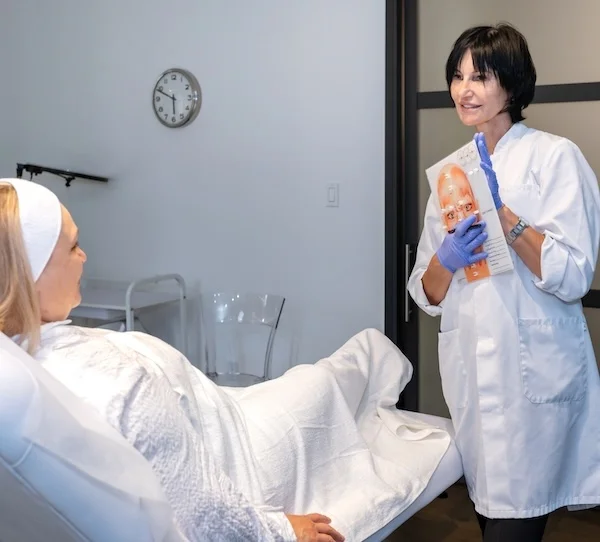
A dermal filler consultation at MedVSPA is a planning session, not simply a decision about where to inject.
We review your previous filler treatments—including when, where, and how much was injected—as well as other aesthetic treatments and how you responded to them.
During the consultation, we discuss your concerns, possible treatment options, and the results you can realistically expect. For mature faces especially, this may involve a comprehensive plan rather than filler alone.
We also explain possible side effects, what to report after treatment, and how MedVSPA responds if a concern develops. The product, amount, price, treatment date, and expected recovery are discussed before you decide together how to proceed.
Dermal Filler FAQs
1. What are dermal fillers made of?
Dermal fillers are made from synthetic hyaluronic acid, a substance that closely resembles the hyaluronic acid naturally found in the skin and is gradually broken down by the body.
2. How long do dermal fillers last?
Most dermal fillers last between 9 and 24 months, depending on the formulation, treatment area, and individual metabolism.
3. Do dermal fillers look natural?
When placed conservatively and according to facial anatomy, dermal fillers support natural facial balance rather than creating an overfilled or artificial appearance.
4. Are dermal fillers reversible?
Yes. Hyaluronic acid dermal fillers can be dissolved if needed, which offers flexibility and reassurance for patients.
5. Are dermal fillers safe?
Dermal fillers are considered safe when performed by a trained medical professional using approved products and anatomy-based techniques.
6. Can dermal fillers replace Botox or RF microneedling?
No. Dermal fillers restore structural support and volume, while Botox affects muscle activity and RF microneedling improves skin tightening and collagen quality.
7. How many dermal filler treatments are usually needed?
Some patients achieve their goals in one session, while others—especially with mature skin—may benefit from a staged approach using two appointments.
8. Do dermal fillers stop the aging process?
No. Dermal fillers temporarily restore volume and support, but natural aging and hormonal changes continue over time.
9. Who is a good candidate for dermal fillers?
Adults experiencing volume loss, facial asymmetry, or age-related structural changes may be candidates following a medical consultation.
10. How do I know if dermal fillers are right for me?
A consultation allows assessment of facial structure, goals, and expectations to determine whether dermal fillers are appropriate.
Book Your Dermal Filler Consultation in Yorkville
Considering dermal fillers in Toronto? Meet with us at MedVSPA in Yorkville to discuss your concerns and decide on the next step with a treatment plan designed for you.