
Microneedling is a skin treatment that improves texture and tone by creating controlled micro-injuries that stimulate collagen.
It works at a superficial level and is typically used for mild skin concerns rather than deeper structural changes.
This guide explains how microneedling is used in Toronto, what it can improve, and when other treatments may be more effective.
At MedVSPA, this page is for educational purposes and focuses on helping you understand your options.
The Table of Content:
- What Is Traditional Microneedling?
- How Microneedling Works in the Skin
- Benefits of Microneedling for Skin Quality?
- What Microneedling Can Improve (and Its Limitations)?
- Is Microneedling Safe for Different Skin Types?
- Microneedling for Mature Skin (40s, 50s, 60s+)
- When Microneedling May Not Be Enough?
- Alternatives to Microneedling in Toronto
- How to Choose the Right Skin Treatment in Toronto?
- Microneedling FAQ
What Is Traditional Microneedling
Microneedling is a surface-level treatment that uses very fine needles to create controlled micro-injuries in the skin, triggering a natural wound healing response and supporting collagen production.
Unlike RF microneedling, it does not deliver energy into deeper layers of the skin. Traditional microneedling focuses on skin regeneration, helping improve texture and overall skin quality rather than deeper tightening or structural changes. It’s typically used for mild concerns and works gradually with repeated sessions.
How Microneedling Works in the Skin
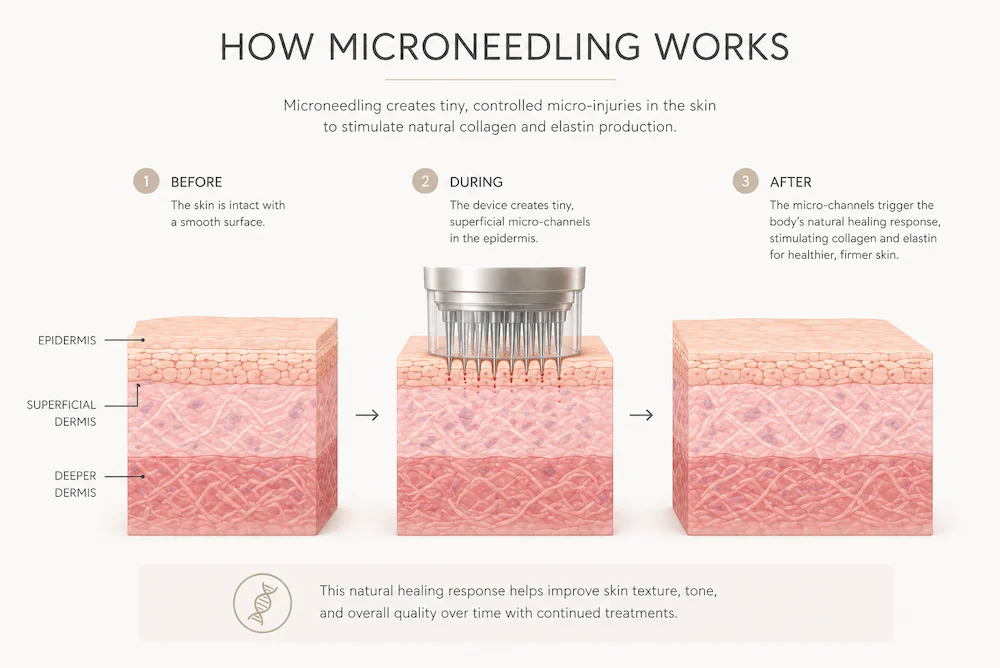
Microneedling creates small, controlled micro-injuries in the skin, mainly within the epidermis and very superficial dermis, which helps trigger a natural repair response.
Even at this surface level, the process stimulates dermal–epidermal interaction, supporting collagen and elastin production. This gradual skin regeneration can improve overall texture and tone, although its effect remains limited compared to treatments that reach deeper layers.
Benefits of Microneedling for Skin Quality
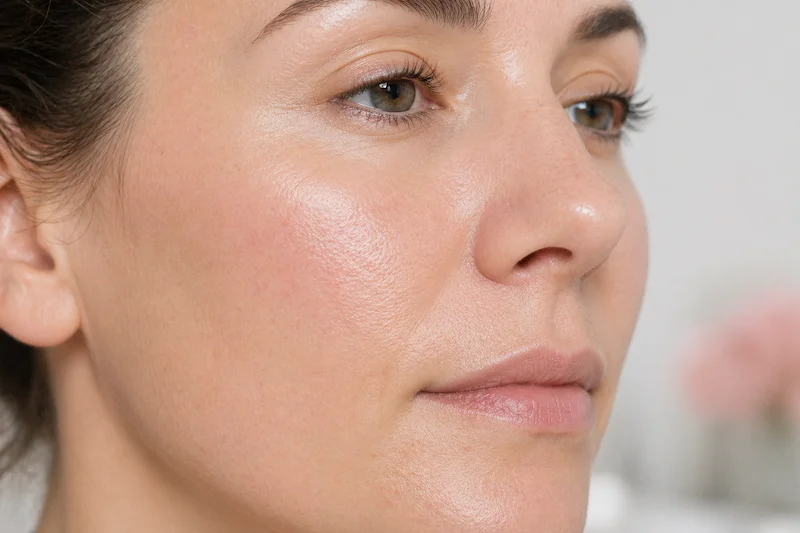
Microneedling can help improve overall skin quality by supporting gradual, natural renewal in the upper layers of the skin.
Over time, many people notice smoother skin texture, a more even tone, and a brighter appearance. It may also help refine the look of pores and soften early, mild skin changes, making it a subtle option for maintaining healthy-looking skin.
What Microneedling Can Improve (and Its Limitations)
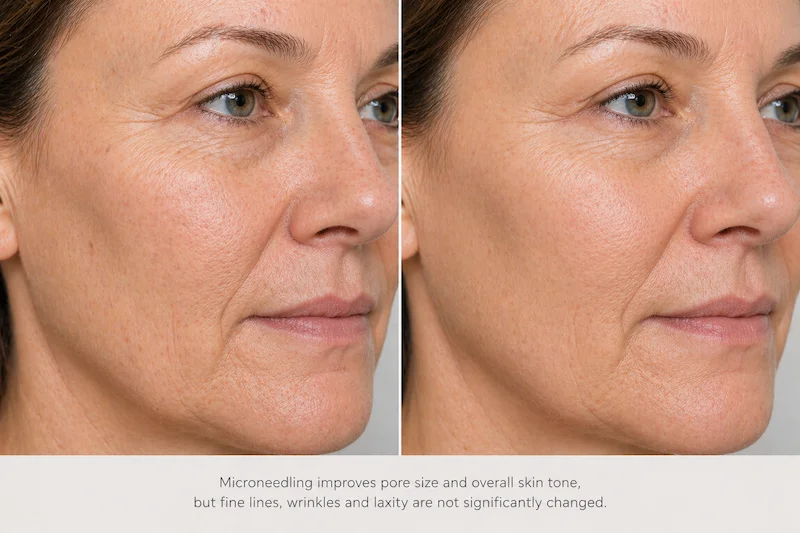
Microneedling can help improve mild, surface-level concerns such as uneven texture, enlarged pores, and early fine lines by supporting the skin’s natural renewal process.
At the same time, it has limitations. Because it works mainly in the upper layers of the skin, it cannot reach the depth where stronger collagen remodeling happens. Mechanical stimulation alone is often not enough for deeper renewal or structural changes. Microneedling is best understood as a resurfacing treatment rather than a restructuring one.
Is Microneedling Safe for Different Skin Types?
Microneedling is generally considered safe across skin types when depth and technique are carefully controlled, but it still carries some risks.
Because it works in the epidermis and superficial dermis, it can trigger melanogenesis, which may lead to post-inflammatory hyperpigmentation—especially in Fitzpatrick skin types IV and above.
This risk can also increase with age and skin sensitivity. Like other superficial treatments, including certain lasers or aggressive exfoliation, microneedling requires careful technique and strict sun protection to minimize unwanted pigment changes.
Microneedling for Mature Skin (40s, 50s, 60s+)
Microneedling can be used for mature and menopausal skin, where changes like dryness, uneven tone, and slower cell turnover become more noticeable.
In menopausal skin, it may help improve the buildup of dead cells and support better product absorption, which can help with dryness and dullness. It can also make skin tone appear more even over time. However, because it works at a superficial level, it does not significantly improve thinning skin or deeper structural changes. It’s better suited for early aging signs and overall skin quality rather than more advanced concerns.
When Microneedling May Not Be Enough
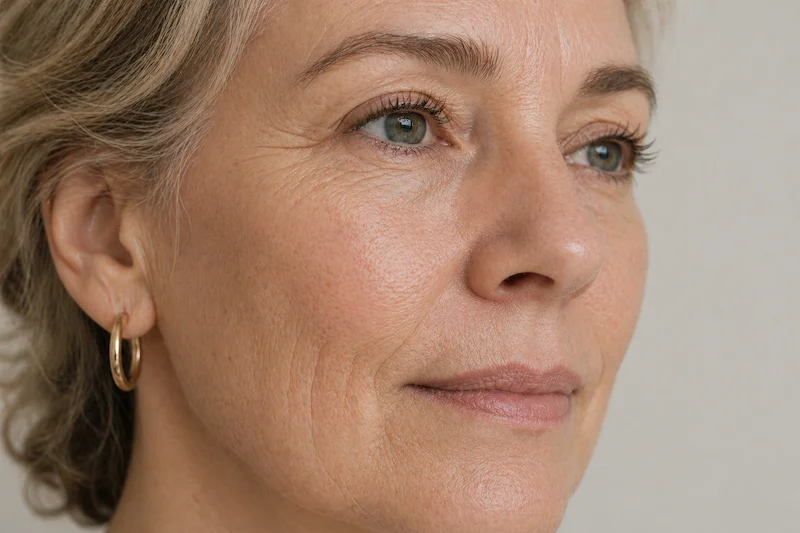
Microneedling may not be enough when deeper structural changes in the skin are the main concern, rather than surface texture or tone.
Concerns like under-eye bags, hooded eyelids, marionette lines, jowls, and noticeable skin laxity usually require treatments that work beyond the superficial layers. In these cases, options that support deeper collagen stimulation and structural improvement may be considered.
To understand how a deeper approach works, you can read more here: RF Microneedling in Toronto.
Alternatives to Microneedling in Toronto
Several skin rejuvenation treatments in Toronto can be considered as alternatives to traditional microneedling, depending on your goals and skin condition.
- Non-invasive skin treatments: Focus on hydration and skin quality, using peptides or hyaluronic acid–based solutions to improve dryness and overall appearance.
- Collagen-stimulating treatments: Options like SkinVive or HArmonyCA support deeper skin quality improvement by helping stimulate collagen over time.
- More advanced skin therapies: Treatments such as RF microneedling work at deeper levels of the skin and may be considered when surface-level approaches are not enough.
To understand how RF microneedling works and when it may be more appropriate. You can learn more here: RF Microneedling.
How to Choose the Right Skin Treatment in Toronto
Choosing the right treatment depends on your skin concerns and what you’re hoping to improve, and it’s best approached by looking at three key factors.
- Is the result achievable? Microneedling may be suitable for younger skin or for mature skin when the goal is hydration, smoother texture, and a more even tone. It may not be enough for deeper structural changes such as under-eye bags, hooded eyelids, marionette lines, jowls, or noticeable skin laxity.
- What are the risks and safety considerations? These depend on your skin type and condition and should be evaluated before choosing any treatment.
- Is the investment reasonable? Consider whether the expected results justify the time and cost, and whether alternative treatments may be a better fit for your goals.
Compare two treatments: Microneedling VS. RF Microneedling.
Microneedling FAQs
1. What is microneedling and how does it work?
Microneedling uses very fine needles to create controlled micro-injuries in the skin, triggering a natural healing response that supports collagen production. It works mainly in the superficial layers, helping improve skin texture and tone over time through gradual skin regeneration.
2. What skin concerns can traditional microneedling help improve?
Microneedling can help improve mild concerns like uneven texture, enlarged pores, and early fine lines. It supports overall skin quality by encouraging natural renewal, but results are typically subtle and develop gradually with a series of treatments.
3. What are the limitations of traditional microneedling?
Microneedling has a limited impact on deeper skin concerns such as significant laxity, deep wrinkles, or structural changes. Because it works at a superficial level, it is best suited for surface improvement rather than lifting or deeper collagen remodelling.
4. Is microneedling safe for different skin types and tones?
Microneedling is generally safe across skin types when performed carefully, but there is still a risk of post-inflammatory hyperpigmentation. This is especially important for darker skin tones, where proper technique and strict sun protection are essential.
5. How many microneedling sessions are usually needed?
Microneedling typically requires a series of treatments to see gradual improvement in skin texture and tone. The exact number varies depending on the skin condition, but results are usually subtle and build over time rather than after a single session.
6. Is microneedling suitable for mature or menopausal skin?
Microneedling can be used for mature and menopausal skin to support surface-level improvements like smoother texture and more even tone. However, it may not be sufficient for deeper structural changes, where other approaches may be considered.
7. When is microneedling not enough for skin concerns?
Microneedling may not be enough when concerns involve deeper structural changes like skin laxity, sagging, or under-eye bags. In these cases, treatments that work at deeper levels of the skin may be more appropriate.
8. What is the difference between microneedling and RF microneedling?
Microneedling works at the surface level, while RF microneedling combines needles with energy to reach deeper layers of the skin. This allows for more intensive collagen stimulation. Learn more: RF microneedling vs microneedling.