
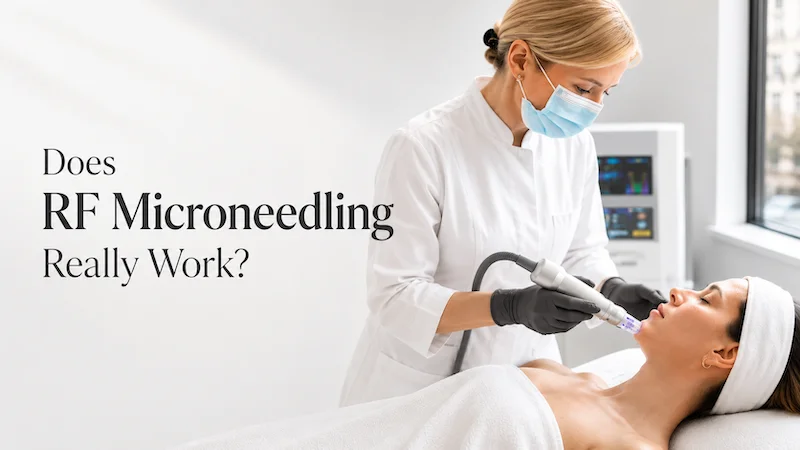
Does RF Microneedling Really Work?
Author: Elena Zhdan — Senior Medical Aesthetician
Medical Reviewer: Marina Vashkevich, RN
MedVSPA Clinic — Yorkville, Toronto
Nurse-led medical aesthetics clinic focused on evidence-based skin treatments and personalized care.
Last reviewed: April 2026
RF microneedling delivers radiofrequency energy into the dermis, stimulating collagen remodelling at a structural level.
This guide explains does RF microneedling really work under the skin, what clinical evidence shows, and why results can vary based on individual skin biology in real patients. Explore more RF Microneedling Articles covering treatment comparisons, downtime, mature skin, and realistic treatment expectations.
Key Insights: How RF Microneedling Works
RF microneedling stimulates in the dermis, where collagen is produced. In practice, including treatments performed in Toronto clinics, its effectiveness depends on how the skin responds at a biological level.
- RF energy creates controlled thermal zones in the dermis
- Collagen and elastin synthesis is activated below the surface
- Dermal thickness and density increase over time
- Energy is delivered at precise depths for consistent stimulation
- The epidermis remains largely unaffected during treatment
This dermis-targeted mechanism explains how RF microneedling is effective for structural skin changes rather than just surface-level improvement. Learn more about RF microneedling treatment and how it is applied in practice.
What Happens in the Dermis During RF Microneedling
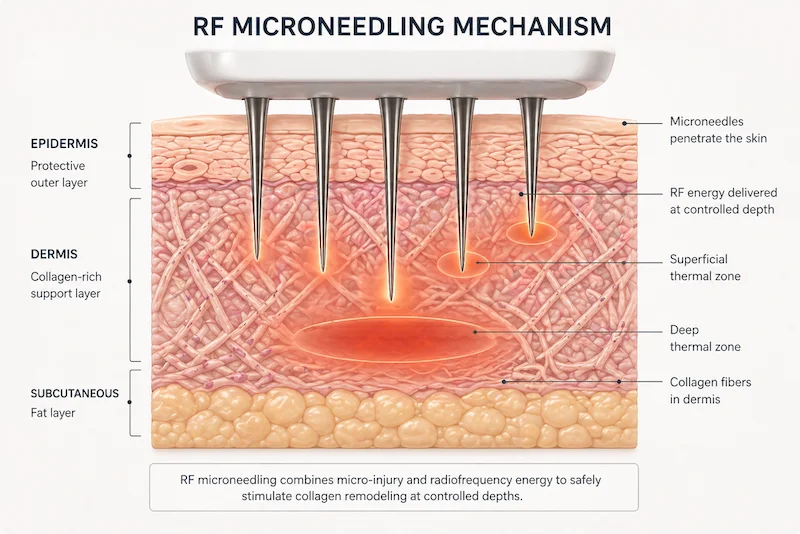
RF microneedling works by combining mechanical micro-injury with radiofrequency energy delivered into the dermis, where collagen is produced. To understand the basics, see Microneedling- Toronto. This explains does RF microneedling really works in the skin: controlled stimulation creates targeted thermal zones that initiate collagen remodelling at a structural level.
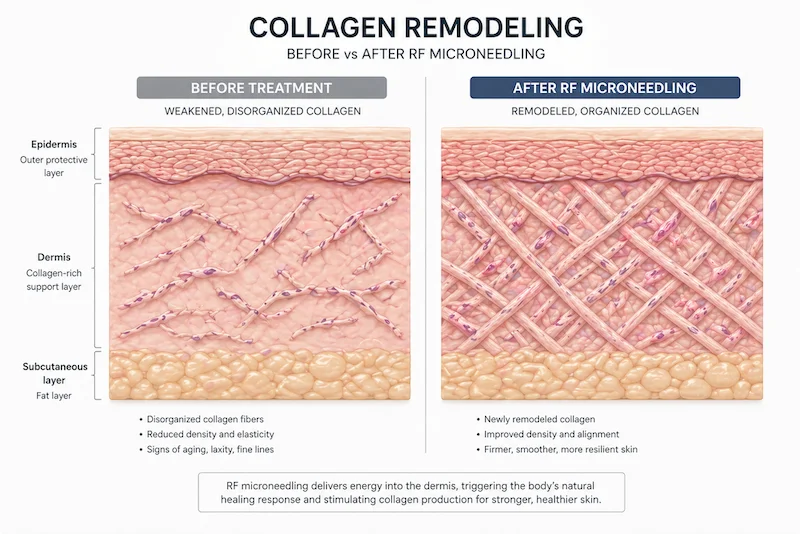
The micro-injuries activate the skin’s natural repair process, while deeper RF heating helps break down older, damaged collagen. This process stimulates the production of new, structurally organized collagen responsible for firmness and support.
The needles can deliver RF energy at both superficial and deeper levels, allowing controlled stimulation across different depths of the skin.
When stimulation is limited to the epidermis, the response is mainly faster cell turnover, as seen with facials or chemical peels. By reaching the dermis, RF microneedling supports deeper collagen remodelling and gradual skin tightening over time.
What Clinical Studies Show RF Microneedling
- Increased collagen activity in the dermis
- Structural changes in deeper skin layers
- More organized collagen formation over time
- Measurable energy delivery at controlled depths
Why RF Microneedling Results Are Gradual and Vary?
RF microneedling works through biological processes in the dermis, which explains how RF microneedling works in the skin and why results vary between individuals. Collagen remodelling depends on how well the skin responds to structural-level stimulation.
Two key factors influence this response:
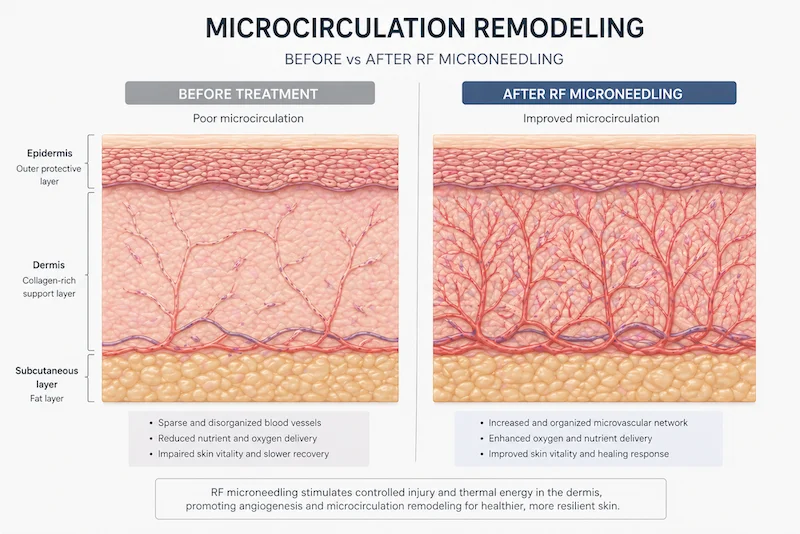
- Microcirculation (blood flow): RF microneedling relies on the skin’s ability to conduct radiofrequency energy into the deep skin. Healthy circulation supports more even heat distribution and consistent collagen stimulation. When microcirculation is reduced—common with aging—or when tissue is affected by fluid retention, the response can be less efficient.
- Collagen-producing cells (fibroblasts): RF microneedling stimulates fibroblasts to produce new collagen. Over time, these cells can lose their optimal shape and activity. For effective collagen remodelling, they need to function properly, which affects how well new, structured collagen is formed.
Because RF microneedling targets the deep skin, where both circulation and cellular activity play a role, results develop gradually rather than instantly. This is why outcomes can differ depending on the condition of the skin.
Expert Insights from MedVSPA Specialists
RF microneedling results vary based on how the skin responds at a biological level, which explains how RF microneedling works in real patients.
- Age and skin condition: Younger skin often responds faster due to stronger collagen activity. Aging or menopausal skin may respond more gradually because microcirculation and cellular function are reduced.
- Clinical vs real-life outcomes: Clinical studies focus on specific age groups, but in practice, RF microneedling can stimulate collagen even in older skin. The response depends on tissue quality rather than age alone.
- Treatment approach: RF microneedling is tailored to the skin. Proper depth, controlled stimulation, and supportive home care help improve collagen remodelling and overall skin response.
The same rules apply to RF microneedling for body areas.
How RF Microneedling Results Can Be Supported in Practice
To reinforce results, RF microneedling in Toronto is often combined with supportive treatments that improve how the skin responds at a biological level. These approaches help optimize microcirculation, hydration, and the conditions needed for effective collagen remodelling.
- SkinVive (hyaluronic acid): supports hydration and improves tissue quality, helping fibroblasts function more effectively
- RF + vacuum (double chin): supports fluid movement and microcirculation, helping reduce swelling and improve tissue response
- DMAE (neck area): supports muscle relaxation, improving overall skin appearance in the neck
- Exosomes (post-treatment): help calm inflammation and support recovery, especially for sensitive or reactive skin
These combinations reflect how RF microneedling works in real life—by improving the skin environment and supporting the conditions needed for consistent collagen remodelling. Learn more about RF microneedling in Toronto and how the treatment can be tailored to your skin.