
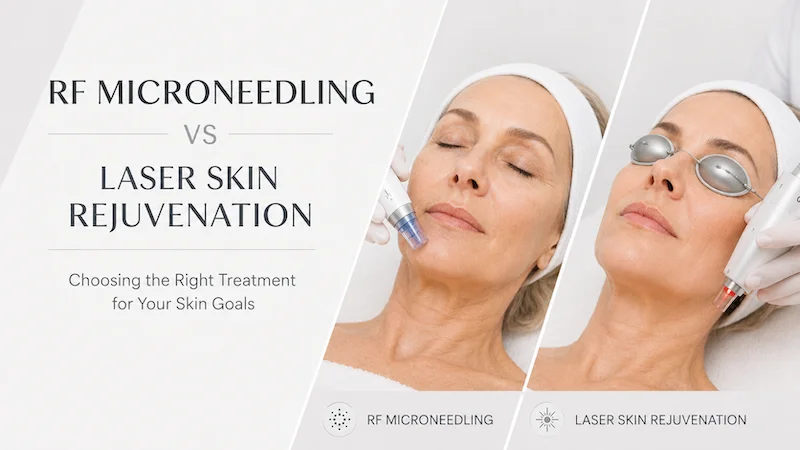
RF Microneedling vs Laser Skin Rejuvenation
Author: Olena Angelowska — Senior Medical Aesthetician
Medical Reviewer: Marina Vashkevich, RN
MedVSPA Clinic — Yorkville
Nurse-led medical aesthetics clinic in Toronto specializing in RF microneedling, mature skin rejuvenation, and personalized treatment planning.
Last reviewed: May 2026
Trying to decide between RF microneedling and laser skin rejuvenation?
Both treatments improve skin quality, but they are often chosen for different concerns. Laser treatments are commonly used for pigmentation, sun damage, and surface resurfacing, while RF microneedling is more often selected for tightening, mature skin concerns, laxity, and firmer-looking skin with less visible downtime.
This guide compares both treatments side by side to help you understand which option may better fit your skin goals. Browse more RF Microneedling Articles covering tightening, downtime, mature skin, and treatment comparisons.
Key Insights: RF Microneedling vs Laser Treatments
- RF microneedling is more commonly chosen for tightening, mature skin, laxity, and firmer-looking skin support.
- Laser treatments are often preferred for sun damage, pigmentation, uneven tone, and stronger skin resurfacing.
- RF microneedling may involve less visible downtime and can be safer for sensitive or darker skin tones.
- The best treatment depends on whether your main concern is tightening, resurfacing, pigmentation correction, or skin sensitivity.
RF Microneedling vs Laser: What's the Difference?
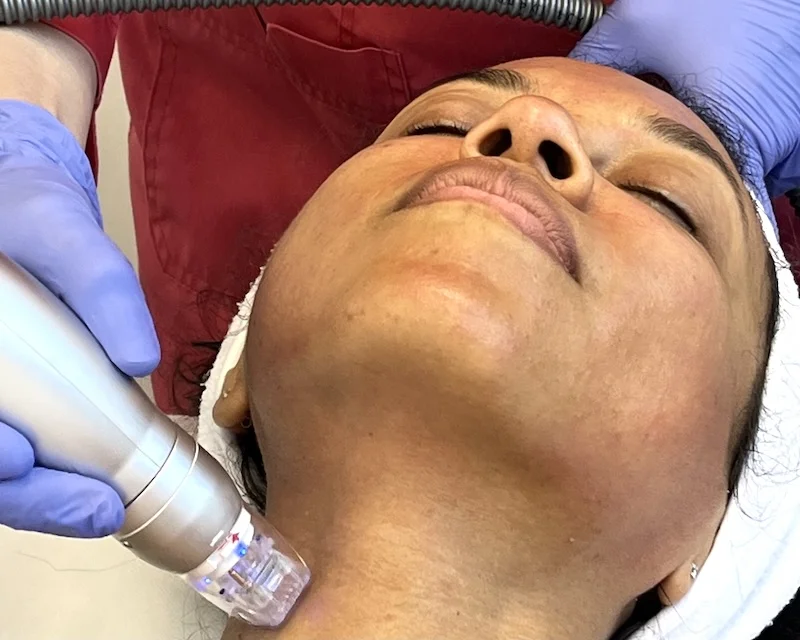
RF microneedling combines ultra-fine needles with radiofrequency (RF) energy. The technology utilizes needles to create controlled micro-injuries in the skin, combined with radiofrequency-generated heat. The needles deliver heat deep into the dermis to trigger collagen production and tissue tightening.
Laser treatments, by contrast, use focused beams of light to target skin layers. Some lasers ablate (remove) the top layer of skin, while others heat deeper tissues to stimulate regeneration.
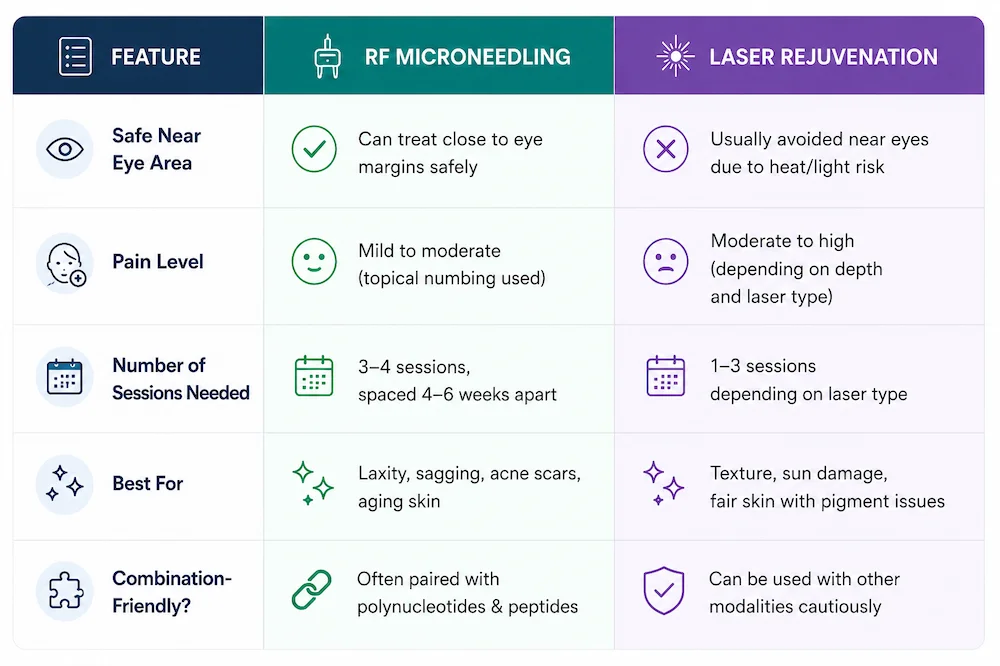
RF microneedling bypasses the epidermis, targeting below the surface—this makes it gentler, with fewer side effects and risks such as hyperpigmentation.
Which Treatment Is Better for Mature or Menopausal Skin?
RF microneedling is more commonly chosen for mature or menopausal skin when tightening, firmness, and skin support are larger concerns.
Laser resurfacing is often effective for surface-level concerns like uneven tone, sun damage, and texture irregularities. RF microneedling, however, is generally preferred when skin thinning, laxity, crepey texture, and lower-face softening become more noticeable with age.
Mature skin usually requires more than surface resurfacing alone. Many clients over 45 choose RF microneedling because it supports firmer-looking skin while improving texture more gradually and with less aggressive surface disruption than many laser treatments. Learn more about treatment expectations, pricing, and recovery in our RF Microneedling Cost & Benefits Guide.
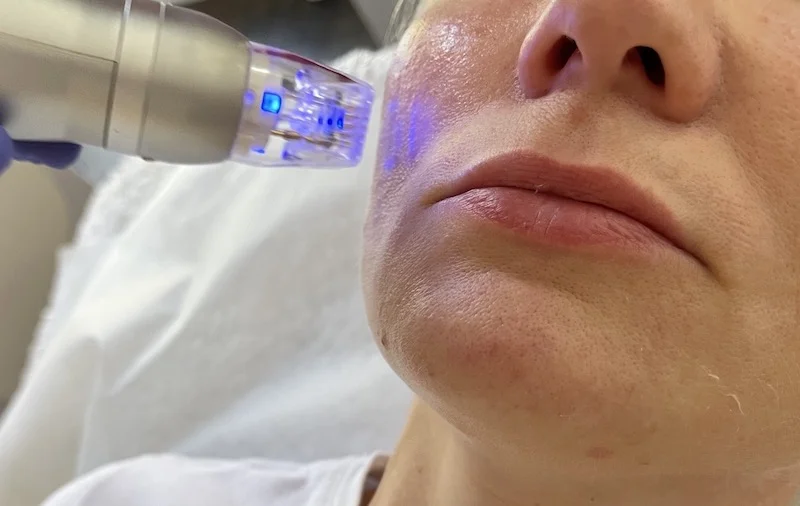
RF Microneedling vs Laser for Tightening and Laxity
RF microneedling is generally preferred when skin tightening, laxity, and firmer-looking skin are the main treatment goals.
Laser treatments are often more focused on surface correction, including pigmentation, uneven tone, and texture. RF microneedling is more commonly selected for concerns such as jawline softening, crepey skin, neck laxity, and mild sagging because it targets deeper skin-support structures while keeping surface disruption more controlled.
Many clients over 40 choose RF microneedling for gradual tightening and skin support without the more aggressive resurfacing and downtime associated with some laser treatments. Learn more about our RF microneedling treatment in Toronto for tightening, mature skin support, and firmer-looking skin.
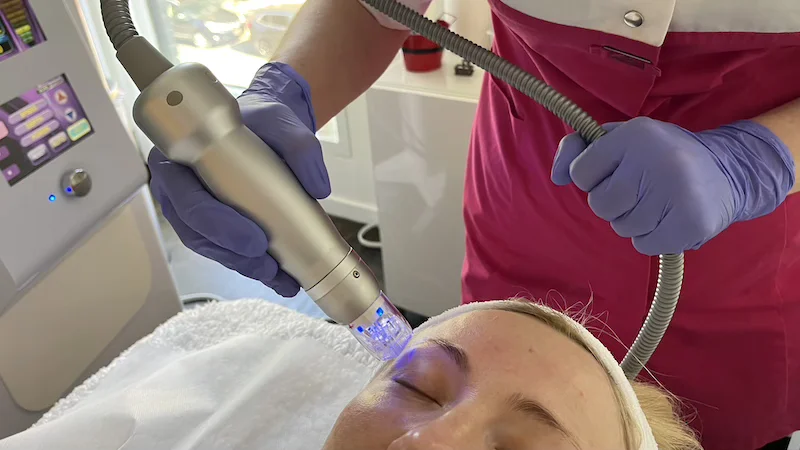
Laser vs RF Microneedling for Pigmentation, Sun Damage, and Skin Tone
Laser treatments are often considered the stronger option for sun damage, uneven skin tone, dark spots, and surface resurfacing.
Lasers work directly on the outer skin layers, making them highly effective for photodamage, pigmentation correction, and visible texture irregularities. More aggressive laser resurfacing treatments can sometimes involve longer downtime and a higher risk of post-inflammatory hyperpigmentation (PIH), particularly in medium to darker skin tones.
RF microneedling treatments such as Sylfirm X are often preferred when pigmentation concerns are combined with skin sensitivity, redness, laxity, or mature skin changes. Because RF energy is delivered below the surface with less disruption to melanin, RF microneedling may be safer for a wider range of skin tones and can typically be performed year-round. Curious how Sylfirm X compares to other RF technologies? Read our Sylfirm X vs Morpheus8 comparison guide.
Downtime Differences: RF Microneedling vs Laser Resurfacing
Downtime is one of the primary concerns for patients considering these two treatments.
- Laser resurfacing often involves 5–10 days of redness, peeling, or crusting—especially with ablative lasers.
- RF microneedling typically results in mild redness and swelling that resolves within 1-3 hours.
Because RF microneedling causes minimal disruption to the outer skin layer, it allows you to return to your routine much faster, making it an ideal option for those seeking discreet results without a recovery period. Explore what to expect before and after RF microneedling in Toronto, including recovery and treatment areas.
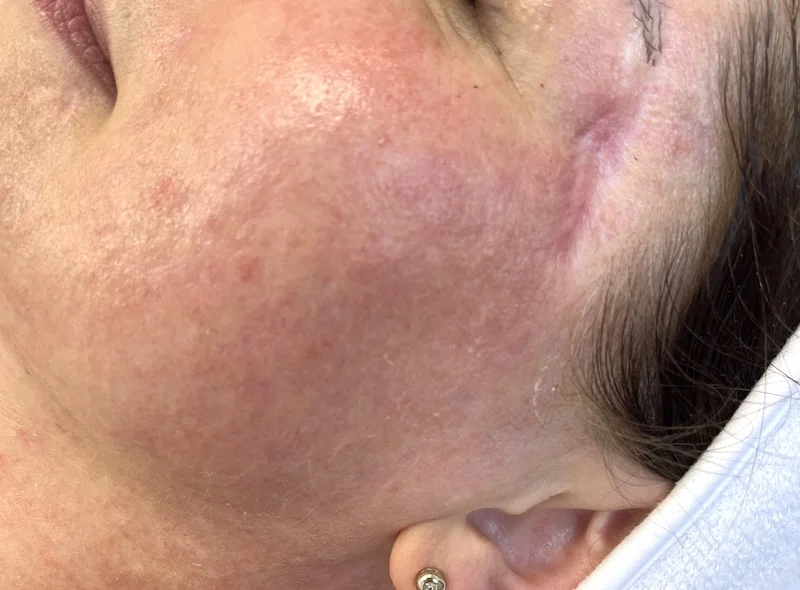
Which Treatment Is Safer for Sensitive or Darker Skin Types?
RF microneedling is often preferred for sensitive, reactive, or darker skin tones because treatment can be performed with less visible surface disruption than many aggressive resurfacing lasers.
Some laser resurfacing treatments may increase the risk of prolonged redness or post-inflammatory hyperpigmentation (PIH), particularly in medium to darker skin tones. RF microneedling is more commonly chosen when concerns such as skin sensitivity, redness tendency, or year-round treatment flexibility become important factors.
For reactive or mature skin, treatment settings and provider experience remain especially important regardless of the technology used.
When Laser Treatments May Be the Better Option
While RF microneedling is more versatile and safer for diverse skin types, laser resurfacing still has a place.
Lasers are ideal for:
- Treating sun spots, liver spots, and photodamage
- Fair-skinned patients who tolerate ablative resurfacing well
- Specific skin conditions like actinic keratoses
- Smoothing deep wrinkles on very fine or crepey skin
In some cases, a combination approach—using laser for pigment and RF microneedling for laxity—can deliver the most comprehensive result.
How to Choose Between RF Microneedling and Laser Treatments
The best treatment depends on whether your main concern is tightening, pigmentation, texture resurfacing, or overall skin sensitivity.
In general, laser treatments are more commonly selected for sun damage, uneven tone, dark spots, and stronger surface resurfacing. RF microneedling is often preferred for tightening, mature skin concerns, laxity, and clients looking for firmer-looking skin with less visible downtime.
For many clients, the decision also depends on skin tone, recovery tolerance, age-related skin changes, and whether pigmentation or skin laxity is the larger concern. In some cases, combining laser resurfacing with RF microneedling may provide the most balanced rejuvenation approach.
Explore more RF Microneedling Articles to compare technologies, downtime, and treatment approaches for different skin concerns, or book a personalized consultation at MedVSPA Toronto.
Frequently Asked Questions
1. Which treatment is better for tightening: RF microneedling or laser resurfacing?
RF microneedling is more commonly chosen when tightening, laxity, and firmer-looking skin are the main goals. Laser treatments are often stronger for surface resurfacing and pigmentation correction, while RF microneedling is typically preferred for jawline softening, crepey skin, and mature skin concerns.
2. Is laser resurfacing better for pigmentation and sun damage?
Laser treatments are often considered the stronger option for pigmentation, sun damage, uneven tone, and surface texture correction. RF microneedling can also improve overall skin quality, but it is more commonly selected for tightening and skin support rather than aggressive resurfacing.
3. Which treatment has less downtime?
Downtime depends on the treatment intensity and technology used. More aggressive laser resurfacing treatments may involve redness, peeling, and longer recovery. RF microneedling treatments such as Sylfirm X are often chosen for clients wanting firmer-looking skin with less visible downtime and a faster return to normal activities.
4. Is RF microneedling safer for darker skin tones?
RF microneedling is often preferred for darker or pigment-prone skin when minimizing surface irritation is important. Some aggressive laser resurfacing treatments may carry a higher risk of post-inflammatory hyperpigmentation (PIH), especially in medium to darker skin tones, which is why treatment selection and settings matter carefully.
5. Which treatment is better for mature or menopausal skin?
RF microneedling is more commonly selected for mature or menopausal skin when laxity, thinning skin, and firmness become larger concerns. Laser treatments may still improve tone and texture, but RF-based treatments are often preferred for tightening support and gradual rejuvenation in aging skin.
6. Can RF microneedling and laser treatments be combined?
Yes. In some cases, combining RF microneedling with laser resurfacing may provide more balanced skin rejuvenation results. Laser treatments may help improve pigmentation and surface texture, while RF microneedling can support tightening and firmer-looking skin.

